
Where to Stay in Seoul: 7 Best Neighborhoods for First-Time Visitors
Choosing where to stay in Seoul can feel surprisingly difficult, especially on your first visit. The city is large, each neighborhood has a different atmosphere, and the best area for sightseeing may not be the best choice for studying, nightlife, shopping, or a longer stay.
The good news is that Seoul’s public transportation system makes it easy to explore different parts of the city. You do not need to stay beside every attraction. What matters most is choosing a neighborhood that fits your schedule, travel style, and the places you expect to visit most often.
This guide compares seven popular neighborhoods in Seoul, including their atmosphere, transportation, advantages, and the types of visitors they suit best.
Quick guide:
- Hongdae: nightlife, cafés, shopping, students, and convenient airport access
- Sinchon and Ewha: university life, everyday convenience, and longer stays
- Myeongdong: shopping and a central base for first-time sightseeing
- Jongno and Insadong: history, traditional streets, palaces, and local culture
- Gangnam: modern Seoul, business trips, shopping, and polished city life
- Seongsu: design, cafés, pop-up stores, and a creative atmosphere
- Itaewon: international restaurants, nightlife, and a diverse community
1. Hongdae: Best for Nightlife, Cafés and a Lively Atmosphere
Hongdae is one of Seoul’s most energetic neighborhoods. The area around Hongik University is filled with restaurants, cafés, fashion shops, music venues, beauty stores, and late-night entertainment. It is particularly popular with younger travelers, solo visitors, students, and anyone who wants plenty to do within walking distance.
Transportation is another major advantage. Hongik University Station connects to Seoul Subway Line 2, the Airport Railroad Express, and the Gyeongui–Jungang Line. This makes Hongdae convenient not only for exploring Seoul but also for arriving from or returning to the airport.
Hongdae can be busy, especially near the main shopping streets and nightlife areas. However, the neighborhood covers a wider area than many visitors realize. Accommodation slightly outside the busiest pedestrian streets can offer convenient access without placing you directly in the center of the crowds.
Hongdae is also practical for a longer stay. Hongik University is nearby, while Yonsei University, Sogang University, and Ewha Womans University are easily accessible from the surrounding Hongdae and Sinchon area. Supermarkets, convenience stores, laundromats, pharmacies, restaurants, and public transportation are all readily available.
Best for: first-time visitors, younger travelers, students, solo travelers, nightlife, cafés, shopping, and convenient airport connections.
2. Sinchon and Ewha: Best for Students and Longer Stays
Sinchon and Ewha have a more everyday, university-centered atmosphere than central Hongdae. These neighborhoods are surrounded by several major universities, including Yonsei University, Ewha Womans University, Sogang University, and Hongik University.
Because so many students live in the area, it is easy to find affordable restaurants, cafés, supermarkets, study spaces, pharmacies, and practical services. Sinchon is active and well connected, while the streets around Ewha often feel slightly calmer.
This area works particularly well for exchange students, language students, interns, and visitors staying in Seoul for several weeks or months. It offers quick access to Hongdae while providing a more residential rhythm for everyday life.

If you will be attending a university or language program, check your daily route before booking. A neighborhood may look close on a map, but the subway line, bus route, hills, and walking distance from the station can make a noticeable difference when repeated every day.
Best for: exchange students, language students, longer stays, university access, affordable dining, and a convenient local lifestyle.
3. Myeongdong: Best for Shopping and Central Sightseeing
Myeongdong is a convenient choice for travelers who want a central base and easy access to many of Seoul’s best-known attractions. The neighborhood is famous for beauty stores, fashion shops, department stores, street food, and restaurants.
Its location makes it easy to reach areas such as Namsan, Namdaemun Market, City Hall, and central Seoul. Myeongdong Station is on Subway Line 4, while Euljiro 1-ga Station provides access to Line 2 from the northern side of the area.
The neighborhood is heavily oriented toward visitors, so it can feel more commercial than residential. It is a strong option for a short sightseeing trip, but travelers looking for a quieter local routine or a longer-term community may prefer another area.
Best for: first-time sightseeing, short trips, shopping, beauty products, and travelers who want a central location.
4. Jongno and Insadong: Best for History and Traditional Seoul
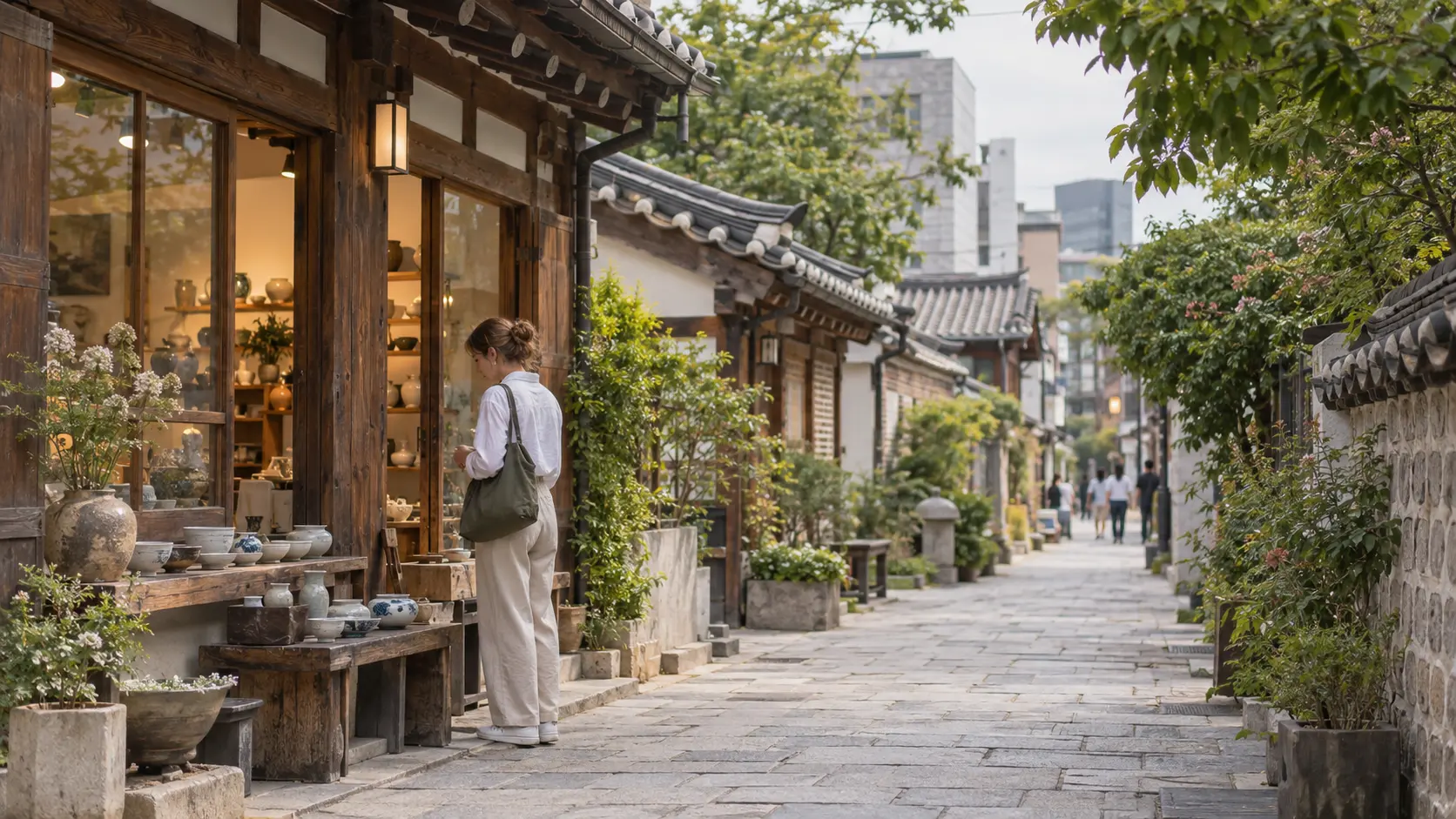
Jongno and Insadong are excellent choices for travelers interested in Seoul’s history and traditional culture. From this part of the city, you can easily visit royal palaces, Bukchon Hanok Village, traditional teahouses, craft shops, museums, and older alleyways.
The atmosphere varies from street to street. Some areas are busy with tourists during the day, while nearby lanes can become peaceful in the evening. Ikseon-dong, in particular, combines traditional architecture with modern cafés and restaurants.
This area is well connected by subway and bus, but it has a different energy from Hongdae or Gangnam. Evenings are generally calmer, and the focus is more on culture, walking, food, and historical sights than on clubs or large shopping complexes.
Best for: traditional culture, palaces, photography, museums, walking, and a quieter central-Seoul experience.
5. Gangnam: Best for Modern Seoul and Business Travel
Gangnam offers a polished, modern side of Seoul. Wide roads, office towers, department stores, restaurants, cafés, beauty clinics, and major shopping areas give the neighborhood a noticeably different character from the older districts north of the Han River.
Gangnam Station is one of the busiest transportation and commercial centers in the city. Nearby districts such as Sinsa, Apgujeong, Cheongdam, Samseong, and Jamsil each have their own atmosphere, so “staying in Gangnam” can mean very different things depending on the exact location.
Gangnam is convenient if your appointments, workplace, clinic, or main plans are in southern Seoul. If most of your itinerary is around the palaces, Hongdae, or north-central Seoul, however, you may spend more time traveling across the city.
Best for: business travelers, modern shopping, beauty appointments, upscale restaurants, and visitors with plans in southern Seoul.
6. Seongsu: Best for Cafés, Design and Pop-Up Stores
Seongsu has become one of Seoul’s most creative neighborhoods. Former industrial buildings and warehouses have been transformed into cafés, boutiques, galleries, brand spaces, and frequently changing pop-up stores.
The area attracts visitors interested in fashion, design, photography, and contemporary Korean trends. Seoul Forest is also nearby, offering green space within a busy urban district.
Seongsu is enjoyable to explore, but it is more spread out than neighborhoods such as Myeongdong. Some popular locations require additional walking, and the neighborhood may feel quiet after shops and cafés close. For many first-time visitors, it works especially well as a place to visit during the day rather than the most convenient base for an entire trip.
Best for: cafés, design, fashion, photography, pop-up stores, and travelers interested in current Seoul trends.
7. Itaewon: Best for International Dining and Nightlife
Itaewon is one of Seoul’s most internationally diverse neighborhoods. You can find restaurants serving food from around the world, international grocery stores, bars, cafés, and a mix of residents and visitors from many different countries.
The surrounding area includes Hannam-dong, Haebangchon, and Gyeongnidan, each with a distinct atmosphere. Hannam feels more polished and residential, while Haebangchon and Gyeongnidan are known for hillside streets, independent restaurants, and smaller bars.
One point to consider is the terrain. Several nearby streets are steep, and accommodation that appears close on a map may involve a significant uphill walk. Check the exact location and route from the subway or bus stop before booking.
Best for: international food, nightlife, diverse communities, independent restaurants, and visitors who enjoy a multicultural atmosphere.
How to Choose the Right Seoul Neighborhood
There is no single best neighborhood for every visitor. Before booking, consider how you will actually spend your days rather than choosing an area only because it is popular online.
Check Your Most Frequent Destination
If you are visiting a university, workplace, clinic, conference venue, or family member repeatedly, prioritize a simple daily route. A direct subway or bus connection is often more valuable than staying in the geographic center of Seoul.
Look Beyond the Station Name
Two properties listed under the same neighborhood can offer very different experiences. Check the actual walking route, nearby exits, hills, major roads, and the distance from public transportation.
Match the Area to the Length of Your Stay
For a short sightseeing trip, central access may be the priority. For a longer stay, everyday needs become more important: supermarkets, laundry facilities, pharmacies, affordable meals, study spaces, and a manageable daily commute.
Think About Your Preferred Atmosphere
A lively neighborhood can be exciting, but it may not suit someone who wants quiet evenings. A calm residential area can be comfortable, but it may feel inconvenient to a traveler who wants cafés, shopping, and nightlife outside the door.
Which Seoul Neighborhood Is Best for You?
- Choose Hongdae if you want energy, nightlife, cafés, shopping, student culture, and convenient airport transportation.
- Choose Sinchon or Ewha if you are studying in Seoul or planning a longer stay near major universities.
- Choose Myeongdong if this is your first short trip and shopping and central sightseeing are your main priorities.
- Choose Jongno or Insadong if you want palaces, traditional culture, museums, and historical streets.
- Choose Gangnam if your plans are mainly in southern Seoul or you prefer a modern business and shopping district.
- Choose Seongsu if you enjoy cafés, design, fashion, photography, and pop-up stores.
- Choose Itaewon if international dining, nightlife, and a multicultural community matter most to you.
Frequently Asked Questions
What Is the Best Area to Stay in Seoul for First-Time Visitors?
Hongdae, Myeongdong, and Jongno are all practical first-time choices, but the best option depends on your itinerary. Hongdae suits visitors who want a lively atmosphere and airport access, Myeongdong is convenient for shopping and central sightseeing, and Jongno is ideal for history and traditional culture.
Where Should Students Stay in Seoul?
Hongdae, Sinchon, and Ewha are convenient for students attending Hongik University, Yonsei University, Sogang University, or Ewha Womans University. Always check the exact route to your campus because walking distances and public transportation connections vary.
Is It Better to Stay North or South of the Han River?
Many traditional attractions, universities, and popular visitor districts are north of the river. Southern Seoul may be more convenient for business, shopping, clinics, or activities around Gangnam and Jamsil. Choose according to the places you will visit most often.
Do I Need to Stay Near Seoul Station?
No. Seoul’s subway and bus systems connect many neighborhoods efficiently. A property near a useful subway line or direct bus route may be more convenient than one located near Seoul Station but far from your actual destinations.
Final Thoughts
The best place to stay in Seoul is not necessarily the neighborhood with the most attractions. It is the area that makes your own schedule easier and gives you the atmosphere you want when you return at the end of the day.
Before booking, compare the exact location, transportation route, walking distance, nearby facilities, and the character of the surrounding streets. A few minutes of route planning can make your entire stay more comfortable.
Planning your first visit? Read our first-time Korea travel tips.
Staying longer? Save these Korean food delivery messages.
Looking for a Place to Stay in Hongdae or Sinchon?
If you are visiting Seoul, studying in Korea, or preparing for a longer stay, explore accommodation options in the Hongdae and Sinchon area.
This link opens the accommodation website, where you can view available properties and contact the accommodation directly.