First Time in Korea? 10 Essential Travel Tips for 2026
Planning your first time in Korea is exciting, but the practical details can feel surprisingly complicated. Which entry form do you need? Will your usual map app work? How do you get from Incheon Airport to Seoul, and what happens if your card is declined?
The good news is that Korea becomes much easier once you prepare a few essentials in advance. This guide covers 10 things to know before visiting Korea in 2026—from entry requirements and mobile data to transportation, payments, accommodation and your first night in Seoul.
1. Check Korea’s Entry Requirements Before You Fly
Entry requirements depend on your nationality, passport, reason for travel and length of stay. Some travelers need a visa, some may need a K-ETA, and others may qualify for a temporary exemption. Do not assume that the rules that applied to a friend—or to your last trip—still apply to you.
Use the Korean government’s Korea Visa Portal to check visa requirements and the official K-ETA website to confirm whether you need electronic travel authorization. Avoid unofficial K-ETA agencies that charge inflated service fees.
Travelers who are required to submit an arrival card can complete Korea’s free e-Arrival Card online within three days before arrival. Travelers with a valid K-ETA generally do not need to submit a separate arrival card, but you should use the official navigator because the requirement varies by status.
Local Mate Tip: Recheck the official rules shortly before departure. Save screenshots of your passport information page, flight details, accommodation address and any approved travel documents somewhere you can access offline.
2. Choose the Right Area to Stay in Seoul
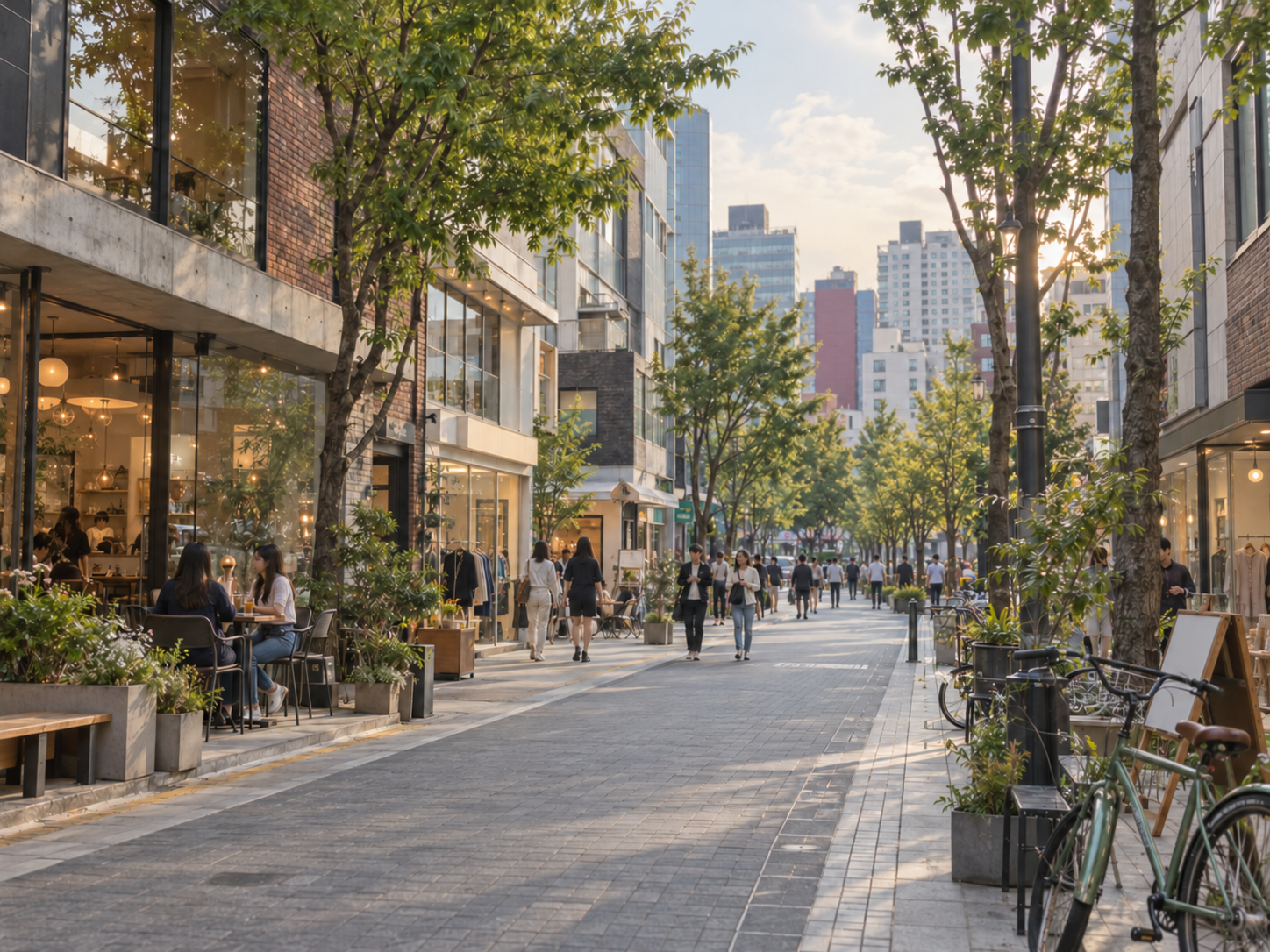
Seoul is much larger than many first-time visitors expect. A hotel may look close to the places on your list when you view the city as a whole, yet reaching them can still require several transfers. Choosing the right neighborhood can save time every day of your trip.
- Hongdae: cafés, shopping, nightlife, live music and convenient access to the airport railroad.
- Myeongdong: a central base for shopping, food and many classic Seoul attractions.
- Jongno and Insadong: palaces, traditional streets, museums and historic neighborhoods.
- Seongsu: design shops, fashion, pop-ups, cafés and Seoul Forest.
- Itaewon: international dining, bars and a multicultural atmosphere.
- Gangnam: modern city life, major shopping areas and business districts south of the Han River.
Look beyond the neighborhood name. Check the actual walking route from the accommodation to the nearest subway station, whether hills or stairs are involved, and how many transfers you will need for your priority destinations.
Local Mate Tip: The cheapest room is not always the best value. Paying slightly more for a convenient location can mean less time commuting and more time enjoying Korea.
3. Arrange Mobile Data Before You Arrive
Reliable mobile data is one of the most useful Korea travel essentials. You may need it immediately to check your airport route, contact your host, translate a message or find the entrance to your accommodation.
Your main options are an eSIM, physical SIM card or pocket Wi-Fi. An eSIM is convenient if your phone supports it and is unlocked. A physical SIM can suit travelers who need a Korean phone number, depending on the plan. Pocket Wi-Fi can work well for families or groups sharing a connection, although someone must carry and charge the device.
Before buying, check device compatibility, data allowance, hotspot restrictions, voice-call support and the exact activation instructions. Install an eSIM before departure when possible, but activate it according to the provider’s directions so the validity period does not begin too early.
Local Mate Tip: Keep the installation QR code and instructions on another device or as a printed copy. You cannot scan a QR code if it is available only on the phone you are trying to set up.
4. Download NAVER Map or KakaoMap
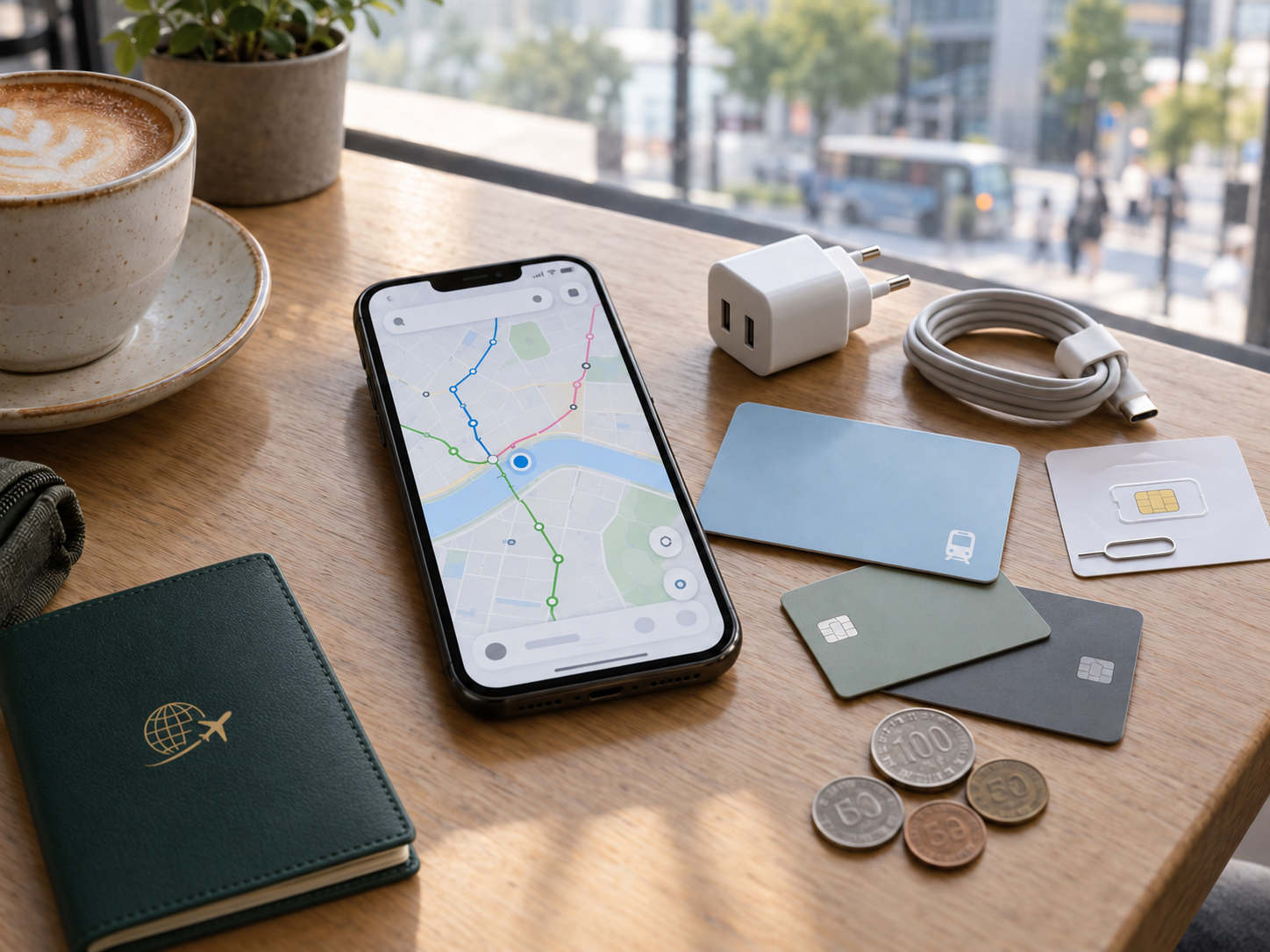
Google Maps is useful for saving places and reading reviews, but it is not always the most practical app for detailed local navigation in Korea. NAVER Map and KakaoMap generally provide better local walking routes, public transportation options and live bus information.
Download at least one before your flight and test it in advance. Search for your accommodation, airport bus stop and first destination. If an English place name does not produce the correct result, copy the Korean name or road address from the accommodation or business listing.
Local Mate Tip: Save important destinations in a list and screenshot the final walking route to your accommodation. Building entrances in dense neighborhoods are sometimes less obvious than the map pin suggests.
5. Plan Your Route From Incheon Airport to Seoul
The fastest route into central Seoul is not automatically the easiest route to your accommodation. Before departure, compare the AREX train, airport limousine bus, taxi and private transfer using your actual destination—not just “Seoul.”
- AREX Express Train: a direct option between Incheon Airport and Seoul Station.
- AREX All-Stop Train: useful for destinations along the airport railroad, including Hongdae, but it can be crowded.
- Airport limousine bus: often convenient with luggage when a stop is close to your accommodation.
- Taxi: door-to-door and useful for late arrivals, heavy luggage or small groups sharing the fare.
- Private transfer: the simplest arranged option for families, groups or travelers who want someone waiting for them.
Check your arrival terminal, operating hours and latest route information on the official Incheon Airport website or the official AREX website. Allow time for immigration, baggage collection and finding the correct platform or bus stop.
Local Mate Tip: If an airport bus stops within a short walk of your accommodation, it may be easier than a faster train journey that ends with transfers, stairs and crowded sidewalks.
6. Start With a Simple Transportation Card
Seoul’s subway and bus network is extensive, affordable and usually the easiest way to explore the city. For most first-time visitors, a rechargeable Tmoney card is a straightforward starting point. It can be used across much of Korea on subways and buses, as well as on some taxis and at participating stores.
Cards are sold at many convenience stores and subway stations. Keep some Korean won available because purchase or reload methods can vary, and foreign-issued cards are not accepted by every machine. On buses, tap when boarding and again before getting off so the system can calculate the fare and eligible transfer discount correctly.
Short-term visitors staying mainly in Seoul can also compare tourist passes such as the Climate Card, but coverage and value depend on your itinerary. The official VISITKOREA transportation-card guide is a useful place to compare current options.
Local Mate Tip: You do not need the “perfect” travel card on your first day. A standard rechargeable card is flexible, familiar and easy to understand.
7. Carry More Than One Payment Method
Korea is highly card-friendly, but a foreign-issued card can still fail at an unattended kiosk, small business, ticket machine or Korean online checkout. The problem may be the payment network or local verification system rather than your available balance.
Bring at least two cards from different networks if possible, notify your bank about international travel when required, and keep a modest amount of Korean won for transportation-card reloads, traditional markets and unexpected payment failures. Do not store every card and all your cash in the same place.
Local Mate Tip: If a card is rejected once, try another payment method instead of repeatedly forcing the same transaction. A backup card and a little cash remove a surprising amount of travel stress.
8. Save Your Accommodation Details in Korean
Save the full Korean road address, accommodation name, phone number, reservation confirmation and check-in instructions before leaving home. A translated hotel name alone may not be enough to identify the correct building, especially for guesthouses, residences and self-check-in properties.
Keep the information in your map app and as offline screenshots. If you take a taxi, show the driver the Korean address and a nearby landmark. If your accommodation has several doors or floors, save a photo of the correct entrance as well.
Local Mate Tip: Do not keep essential arrival instructions only inside an email app that may require a fresh login or internet connection.
9. Expect Self Check-In, Kiosks and Digital Door Locks
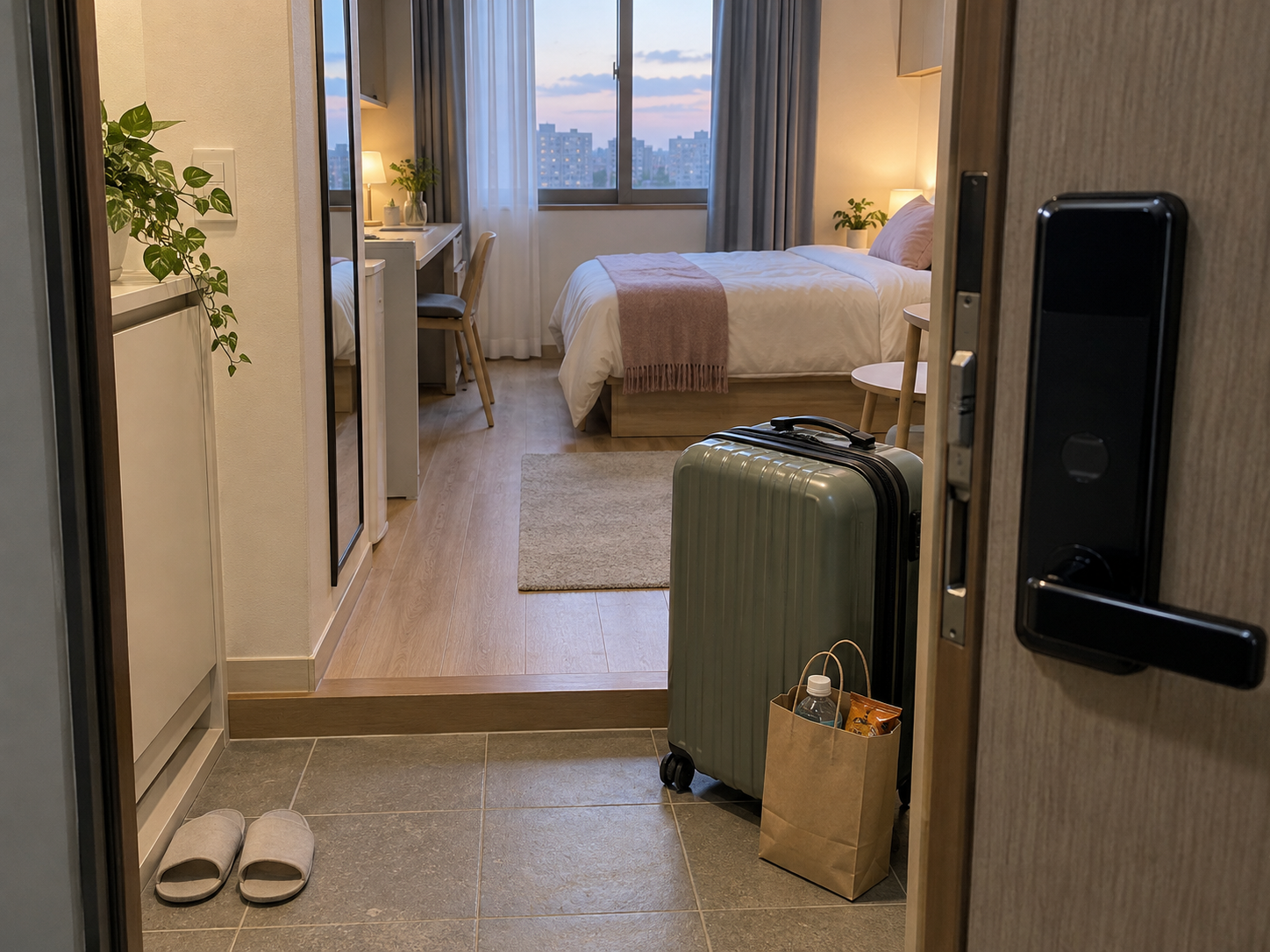
Self-service systems are common in Korea. You may order food at a touchscreen kiosk, complete an accommodation check-in without meeting a receptionist or enter your room using a digital door code instead of a physical key.
Read the instructions rather than assuming every machine or lock works the same way. Some door locks require a cover to be touched first; others need a final symbol after the numbers. Never post your room code publicly, and check that the door has locked when you leave.
Many Korean homes and accommodations also have a small entrance area where shoes are removed. Keep outdoor shoes there instead of walking through the room in them.
Local Mate Tip: Screenshot every step of the check-in guide before traveling from the airport. If something is unclear, ask your host while you still have a stable connection.
10. Keep Your First 24 Hours in Korea Simple
It is tempting to schedule sightseeing, shopping and a famous restaurant immediately after landing. In reality, immigration, baggage collection, mobile setup, airport transportation and finding your accommodation can take more energy than expected.
For your first evening, focus on a short list:
- Reach your accommodation and complete check-in.
- Confirm that your mobile data and map app work.
- Find the nearest convenience store, subway entrance and simple meal.
- Charge your devices and prepare what you need for the morning.
- Sleep before beginning a full itinerary.
Local Mate Tip: Your first day does not need to be impressive. Arriving safely, eating something and getting proper rest will make the rest of your Korea trip much better.
Final Thoughts for Your First Time in Korea
Your first trip to Korea does not have to feel complicated. Most arrival problems become manageable when you have working mobile data, the right map app, a clear airport route, backup payment methods and your accommodation details saved offline.
Prepare the essentials, leave a little flexibility in your first day and give yourself time to learn how things work. Korea may feel unfamiliar when you land, but you will probably adapt faster than you expect.
Welcome to Korea—and enjoy your first trip.
Planning a longer stay in Seoul? Korea Local Mate also creates practical resources for travelers and newcomers who need help with the details beyond a short holiday. Explore the Korea Local Mate shop on Etsy.