
8 Things to Check Before Booking Long-Term Accommodation in Korea
Booking long-term accommodation in Korea requires a different checklist from booking a short holiday. A room that feels convenient for three nights may feel very different after a month, especially when you need space for luggage, laundry, studying and everyday living.
As a host who welcomes international students in the Hongdae and Sinchon areas, I explain costs, supplies, house rules and check-in arrangements before guests need to ask. I have also welcomed students who were disappointed with previous accommodation because the actual room, condition or noise level did not match their expectations.
This guide shares eight things I recommend checking before you book. It is not about choosing the prettiest room or the lowest advertised price. It is about understanding what you will actually live with.
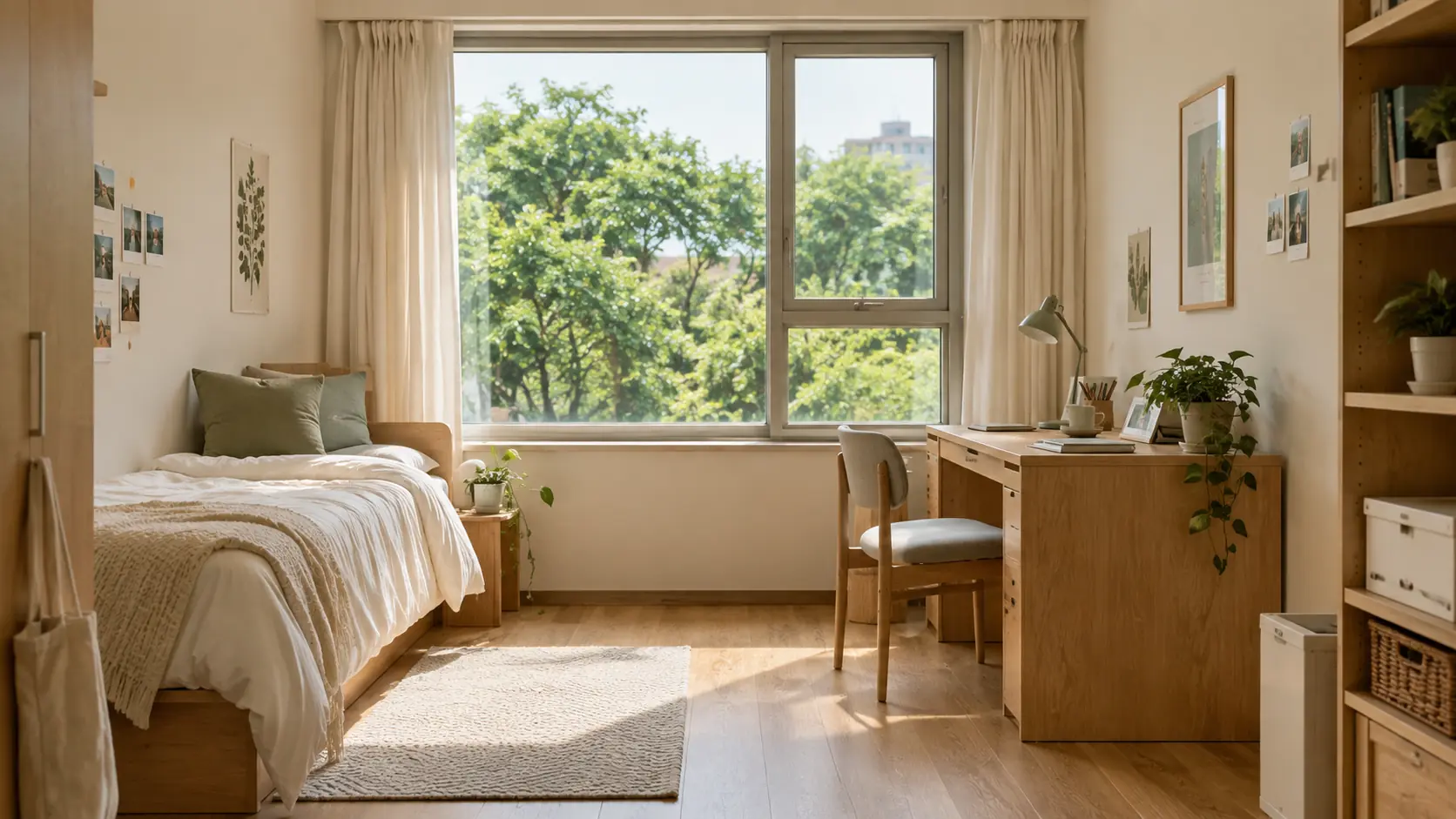
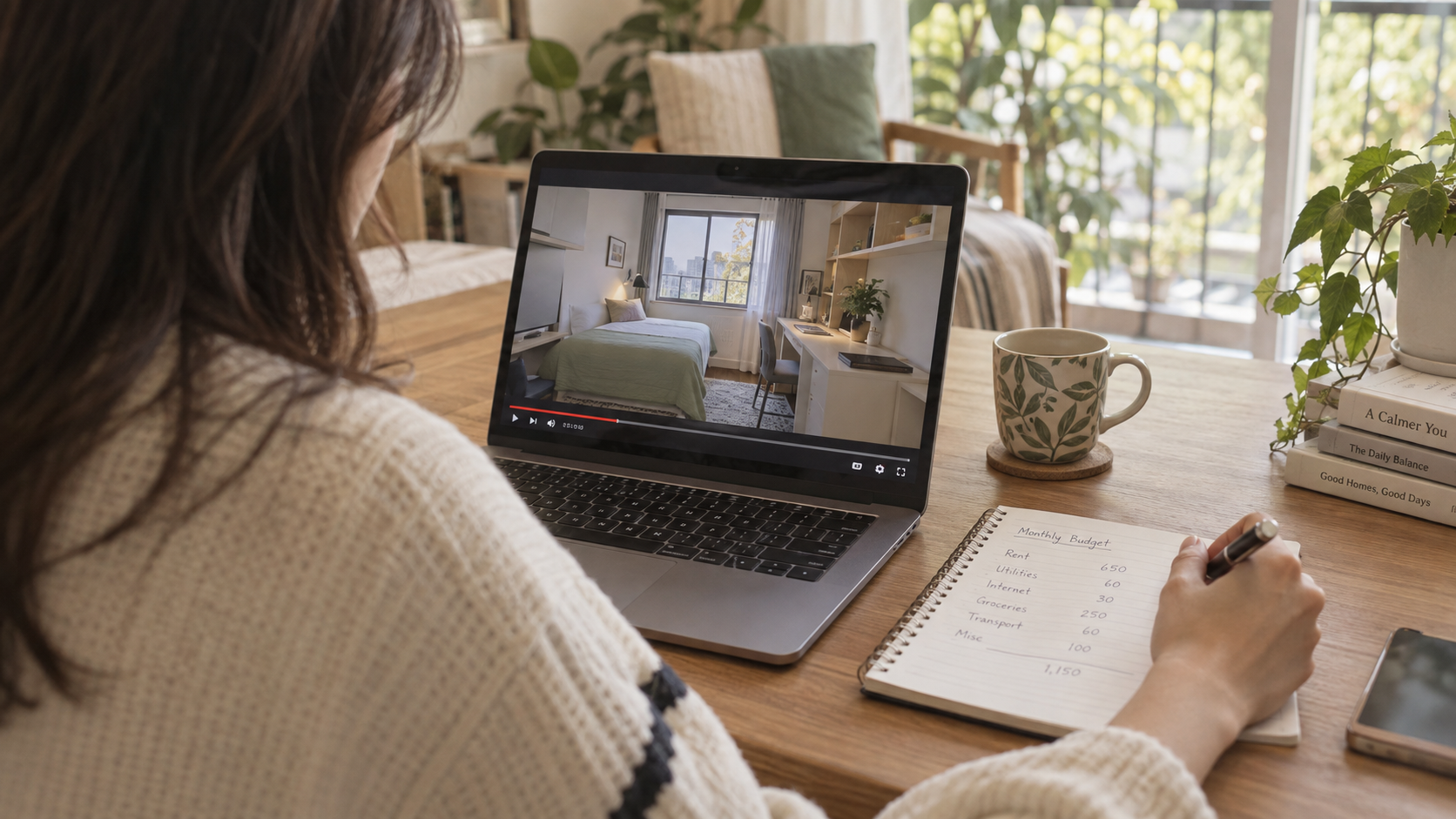
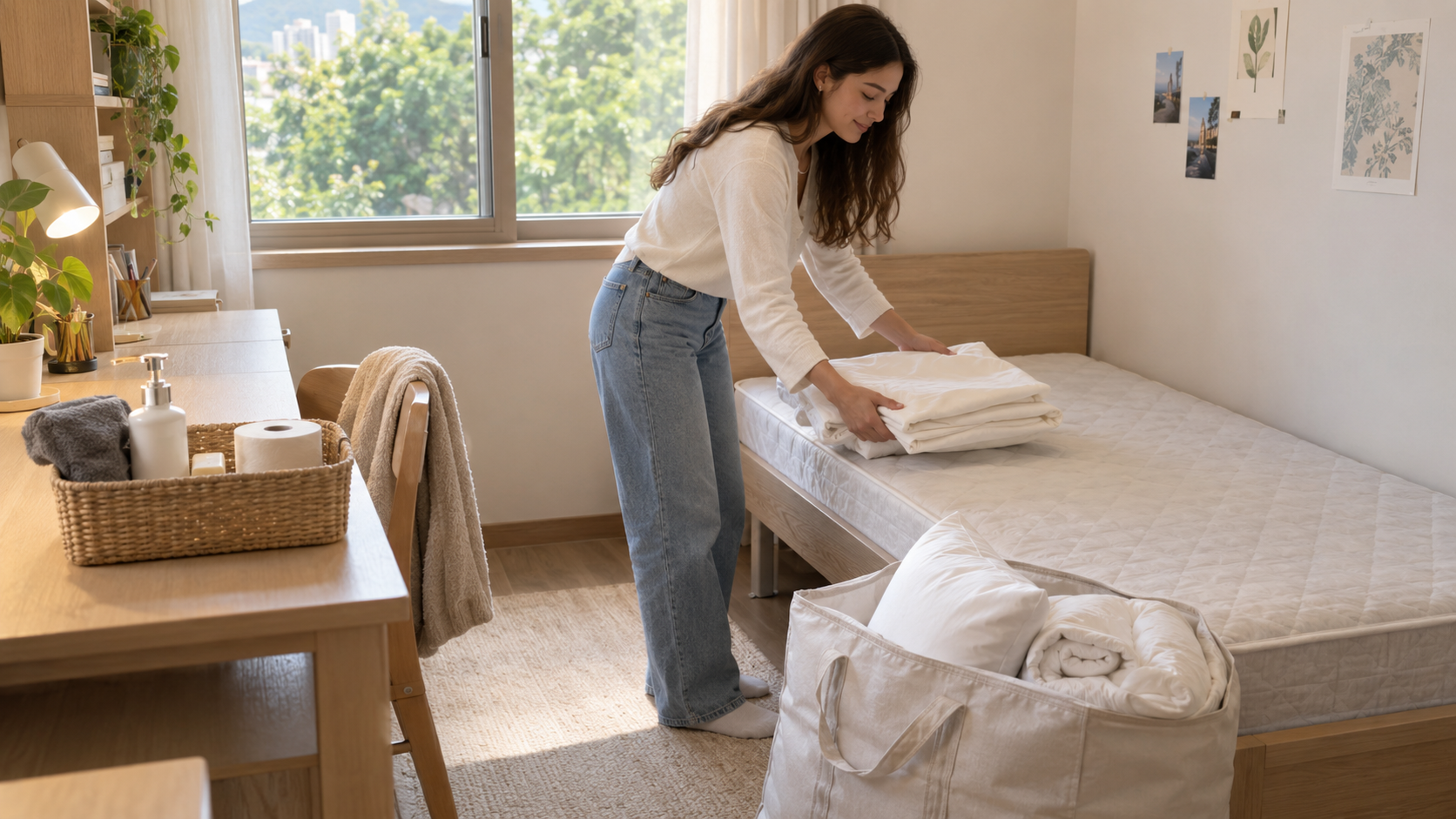
The images in this article are AI-generated illustrations, not photographs of my property or any accommodation available to book.
1. Choose Long-Term Accommodation in Korea by Living Conditions, Not Just Its Name
Guesthouses, hostels, share houses and gosiwon can all be options, but the category alone does not tell you whether a particular property suits your daily life.
| Accommodation type | What to check |
|---|---|
| Guesthouse or hostel | Private room or dormitory, total long-stay price, bathroom arrangements, housekeeping and included supplies. |
| Share house | Private room size, number of people sharing the kitchen and bathroom, cleaning responsibilities and house rules. |
| Gosiwon or gositel | Actual room dimensions, window, bathroom arrangements, building condition and everything included in the monthly price. |
A hostel priced by the night can become expensive over a month. However, some properties offer long-stay rates, so ask for the total for your exact dates rather than assuming every hostel is unsuitable.
Gosiwon are another option around university areas, but prices and facilities vary considerably. A basic room and a renovated room with a private bathroom may offer very different living experiences.
2. Ask to See the Actual Room You Will Receive
Attractive listing photos are a starting point, not a complete inspection. Ask whether the photos show the exact room being offered. If they show a representative room, ask how your room differs.
Request recent, unedited photos or a short walkthrough video. In particular, check:
- The usable floor space and whether you can open your suitcase.
- Storage for clothes, luggage and everyday belongings.
- Whether the window faces outdoors, what it overlooks and whether it opens.
- Whether the bathroom is private, and its actual size and condition.
- The current condition of walls, flooring, furniture and bathroom fittings.
- The room’s position near the entrance, shared kitchen, hallway or street.
A video cannot prove soundproofing. Ask about likely noise sources and look for repeated comments in recent reviews. Some students who later stayed with me had found their previous rooms less comfortable than expected, particularly because of limited space, older facilities or noise.
3. Check What “Premium” and “Fully Equipped” Actually Mean
The word “premium” does not replace a facilities checklist. Ask what is available in your room and what is shared with other residents.
- Is the bathroom private or shared?
- Does the room have an exterior window?
- How are air conditioning and heating controlled?
- Is there a suitable desk and enough storage?
- How is internet access provided?
- Are the washing machine and dryer private or shared?
- Are laundry fees, detergent or restricted operating hours involved?
- What cooking facilities are available?
For example, “laundry available” could mean an in-room washing machine, a shared machine or a paid service. Those arrangements make a difference when you live there for several months.

4. Understand Why an In-Person Viewing May Not Be Available
It is understandable to want to inspect a room before committing, especially if you are already in Korea or have a friend who can visit.
However, occupied rooms cannot always be shown. In my experience, a guest may check out in the morning and another guest may arrive that afternoon or the next day. There may be no empty room available for a viewing, particularly around the start of a university semester.
A room available to view is not necessarily available for your dates. Equally, the number of empty rooms alone does not tell you whether a property is good or bad.
If a viewing is not possible, ask for recent photos or a video, room dimensions and a clear explanation of the room’s location. Hosts should also respect the privacy of current residents.
Decide your essential requirements in advance so you can make an informed decision when a suitable room becomes available. But do not let urgency replace checking the property, payment terms and cancellation conditions.
5. Compare the Total Cost, Not Just the Monthly Rent
Before paying, request a written breakdown for your exact stay dates. Two rooms with similar monthly prices may have different upfront costs and conditions.
- Total accommodation charge for your exact dates.
- Deposit amount, refund timing, refund method and possible deductions.
- Cleaning fee and any other mandatory charges.
- Whether electricity, water, heating and internet are included.
- Bedding rental, laundry charges and other optional costs.
- Booking platform or payment fees.
- Conditions for changing dates, leaving early or extending.
If you will leave Korea without a Korean bank account, confirm the deposit refund method before booking. Do not assume an overseas transfer will be available.
Also, a change to your flight does not automatically change your accommodation contract. Ask how the property handles a later arrival or earlier departure, and keep the written answers.
6. Do Not Assume a Furnished Room Includes Bedding and Supplies
A bed and mattress do not necessarily mean a duvet, pillow, sheets or towels are supplied. Bedding arrangements vary, so ask about each item rather than relying on the word “furnished.”
At my accommodation, welcoming many international students led me to introduce a paid bedding rental option. That is my property’s arrangement, not something you should assume every gosiwon offers.
Check whether you need to bring, buy or rent:
- Mattress cover or fitted sheet.
- Duvet or blanket and a bed pad.
- Pillow and pillowcase.
- Towels and toilet paper.
- Shampoo, soap and other toiletries.
- Laundry detergent and a hair dryer.
Knowing this before travelling helps you avoid packing unnecessary items or discovering late on your first night that something essential is missing.
7. Confirm Residence Documents Before You Book
If you need proof of residence for foreign resident registration or a school procedure, check the required documents with the relevant official service or your school first.
Then ask the accommodation provider whether they can supply the specific document you need and when it can be issued. A property accepting international guests does not automatically mean every document you require will be available.
Confirm this before paying, particularly if paperwork is essential to your stay. Keep a copy of the provider’s written confirmation.
8. Learn the House Rules and Everyday Etiquette
Residents arrive from different countries and cultures, so expectations should be explained clearly rather than left to guesswork.
At my accommodation, outdoor shoes should be removed before entering the living space. If you are unsure, ask where shoes should be left and whether indoor slippers are appropriate.

A long-term residence may not offer daily hotel-style housekeeping. You may be responsible for keeping your room tidy, removing rubbish and ventilating appropriately, especially after showering or drying clothes. Follow the property’s instructions for windows and ventilation fans.
In shared areas, leave the kitchen and laundry facilities ready for the next person. Ask about waste sorting, quiet hours, smoking, visitors and occupancy rules before booking. Choose a property whose rules fit your needs rather than expecting exceptions after arrival.
A Cleaning Fee Does Not Mean You Can Leave Everything Behind
At my accommodation, the checkout cleaning fee is 50,000 KRW. It covers the agreed cleaning service; it does not mean guests should leave unwanted belongings, food or piles of rubbish for the host to sort out.
You are not expected to perform professional deep cleaning, but basic personal tidying is different. Pack your belongings, dispose of rubbish correctly and leave the room reasonably orderly. If you need to discard bulky items, ask the host in advance.
Each property has its own checkout requirements and fee arrangements, so confirm what is expected at yours.

Final Thoughts: Book a Room You Can Actually Live In
The best long-term accommodation in Korea for you is not necessarily the most photogenic or the cheapest. It is a room that suits your daily routine, with costs, facilities, supplies, documents and rules you understand before arriving.
As a host, I believe explaining these details in advance helps prevent misunderstandings. As a guest, asking specific questions and keeping written answers helps you make a more confident choice.
For practical arrival advice, read Travel Problems in Korea: What to Do and Who to Contact, including checking the exact accommodation address and preparing for late check-in.
Once you move in, save these 15 Korean messages for food delivery for entrance instructions, missing items and late orders.
A comfortable stay depends on clear information and mutual respect. Prepare carefully, choose a space that fits your needs and treat it as a home you share responsibility for.
— KR, Korea Local Mate